

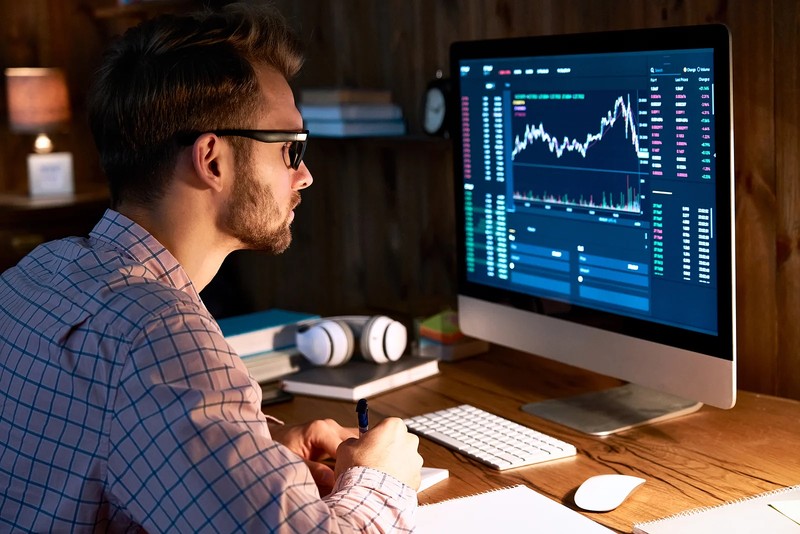
Data goes in and out, prices fluctuate often. And then financial market opportunities disappear. An ever-changing market requires experienced buyers to respond quickly. Human constraints apply to multi-share trading. Emotions, weariness, and slow decision-making may lead to missed chances or expensive mistakes. Algorithmic trading (algo-trading) is beneficial here. These complex algorithms use computers’ lightning-fast processing to change big deal discussions.
Say you need to trade millions of shares. A hand-placed order would be time-consuming and error-prone. Algo-trading algorithms can place orders quickly and precisely to capitalize on market opportunities. Algo-trading reduces emotional vulnerabilities that might hamper pressured decision-making. These algorithms follow rules and risk management criteria to minimize hasty actions that might hurt high-volume revenues.
Perform tasks swiftly and correctly
The speed and precision of algorithmic trading are great. Algorithms can find trading opportunities in huge market data and execute orders in seconds. High-volume transactions need lightning-fast processing since delays might lower profits. Algo-trading eliminates human response time and places orders at the right time, seizing market opportunities. Choosing the best Computer-Driven Trading Strategies is essential here.
Risk management may be part of algo-trading methods. Computers follow price goals, stop-loss limits, and order types. This level of automation reduces human mistake and emotional biases that may make it hard to make wise decisions while closing several transactions quickly. Algo-trading follows rules to guarantee fair share trading.
Improved market analysis and opportunity finding
The human brain is amazing, but it can’t handle big data. Smart data analysis algorithmic trading may solve this. Algorithms can see patterns in price data, market news, social media mood, and other factors that people may miss. This extensive analysis may help algo-trading algorithms predict market fluctuations and find profitable trading opportunities for large transactions.
Algo-trading may capitalize on market vulnerabilities and price gaps. These algorithms may find arbitrage opportunities by watching markets. Arbitrage possibilities arise when stocks may be bought on one exchange and sold on another for a little more. This function is crucial for multi-good transactions since even little pricing differences may provide enormous gains. Algorithmic trading may exploit these flaws before they disappear.
Optimizing and backtesting for better results
Old data helps bot trading. Developers may enhance trading methods utilizing past data. Looping optimizes algorithms to work best in certain settings and adapt to market changes. Algo-trading techniques work best with numerous transactions and constant refining.
Individual traders and financial institutions may tailor algo-trading systems to their risk tolerance. This customization lets programs handle huge transactions by considering order size, liquidity, and market effect. This innovative concept lets algo-trading handle complicated large-share trades.
Humans and Algo cooperate nicely
People must plan deals, monitor algorithms, and adjust to market changes. Algo-trading performs pre-defined strategies quickly and accurately, but it lacks human flexibility to respond to new events or grab unforeseen chances. Cooperation between humans and AI is desirable. People use strategic thought and change to develop a framework, which machines execute quickly and accurately.
Conclusion
Finally, complicated large-scale stock trades need computer-driven trading. Due to their speed, accuracy, and data analysis, they find market possibilities and exploit flaws. Algo-trading systems may be backtested, changed, and altered to adapt to market changes. Algo-trading works best with human supervision. Collaboration between humans and AI maximizes high-volume company profits. This strong blend of human imagination and computer-driven equations’ accuracy will shape large-scale transactions as the financial sector changes.
